
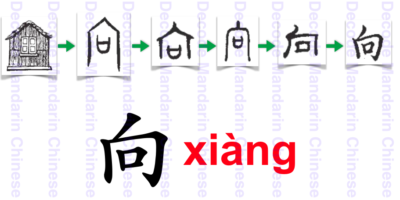
向, a pictographic character of a North facing window, serves as semantic component to form characters. The characters formed by the phonetic component 向 share vowels iang and ang. Continue reading “Component 向 a North facing window”
Component granary 仓
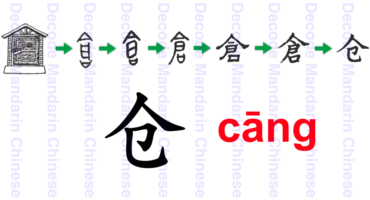
仓, a pictographic character of granary, serves as phonetic component to form characters. Characters formed by the phonetic component granary 仓 share the same vowels as ang, iang, and uang. Continue reading “Component granary 仓”
户 single-leafed door
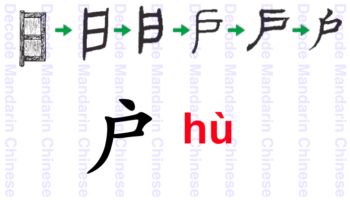
户, a pictographic character of single-leafed door, serves as semantic as well as phonetic component to form characters. Characters formed by the semantic component 户 express meanings related to door, house, etc. Continue reading “户 single-leafed door”
Component door 门
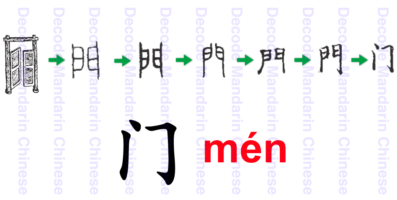
门, a pictographic character of a door, serves as semantic component to form characters. It can also serve as phonetic component. Characters formed by the semantic component 门 express meanings related to door, construction, close, fight, etc, and also as phonetic component. Continue reading “Component door 门”
Component 广 house
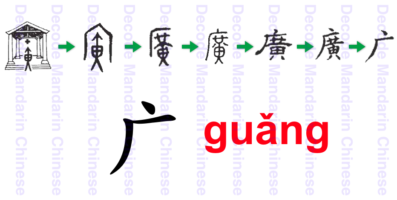
广 (simplified from 廣), originally a house, serves as semantic component to form characters. Characters formed by the semantic component 广 have to do with house. Continue reading “Component 广 house”