
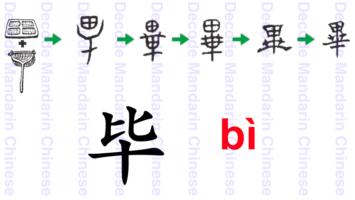
毕, originally a hand-net for hunting, serves as a phonetic component to form characters. The characters formed by the semantic component have the same pronunciation. Continue reading “毕 a hand-net for hunting”
岂 a musical instrument
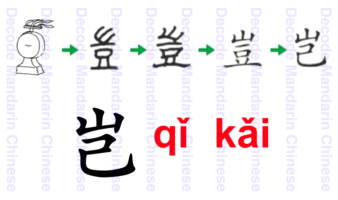
岂, originally a musical instrument, serves as a phonetic component to form characters. Continue reading “岂 a musical instrument”
曲 a bent object
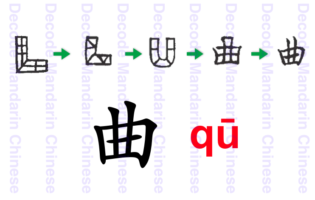
曲, originally a bent object, serves as a phonetic component to form characters. Continue reading “曲 a bent object”
Component mortar used to husk or pestle rice 臼
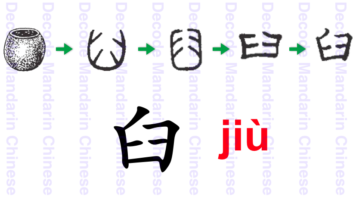
臼, a pictographic character of a mortar used to husk or pestle rice, serves as semantic component to form characters. Also, it can serve phonetic component to form some characters. Characters formed by the semantic component mortar 臼 express things related to mortar or hand. Continue reading “Component mortar used to husk or pestle rice 臼”
耒 a wooden plow
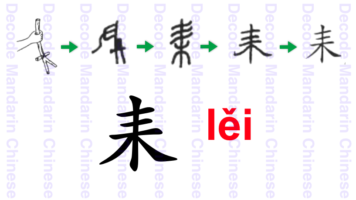
耒 lěi, originally a wooden plow, serves as a semantic component to form characters. The characters formed by耒 express things related to farm tools or farm work, e.g. 耕, 耘, 耙, 耗, 耢, 耥, 耜, etc.
Continue reading “耒 a wooden plow”