
甲 originally meant that “buds open their outer shell in spring”. It serves as a phonetic component to form characters. The position of 甲 in a character: left, right, bottom or inside. Continue reading “甲 buds open their outer shell in spring”
Component 尤 a growing plant
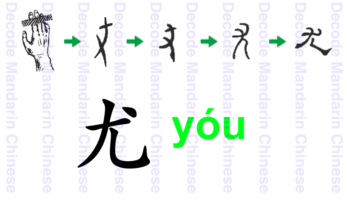
There are two versions for the original meaning of 尤: 1. a growing plant 2. hand. 尤 serves as a phonetic component to form characters. Continue reading “Component 尤 a growing plant”
Component 寅 an arrow
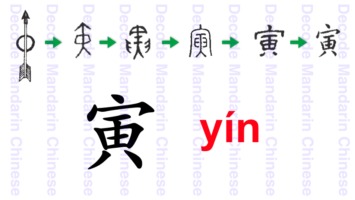
寅, a pictographic character of an arrow, serves as phonetic component to form character. Continue reading “Component 寅 an arrow”
在他乡
Component backbone 吕
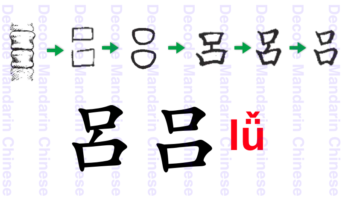
呂吕, originally backbone, serves as a phonetic component to form characters with other semantic components. Most of the characters formed by the phonetic component backbone 吕 have the same pronunciation lǚ. Continue reading “Component backbone 吕”