
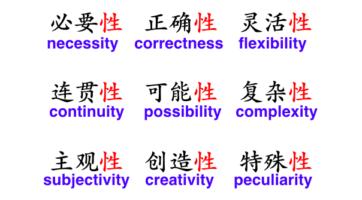
The suffix 性 can turn some adjectives or verbs into abstract nouns ending with “ity, ness, etc” e.g. Continue reading “Suffix 性 and its formula”
Category: Learn Better
厉害 and 利害, which one to choose?
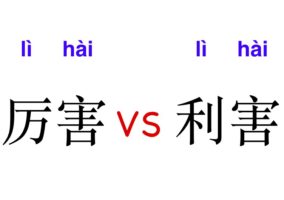
厉害 and 利害 are a pair of words which are very confusing since they share the same pronunciation and the same use. Continue reading “厉害 and 利害, which one to choose?”
弹怎么读?dàn 还是 tán?
弹 has two pronunciations, and there are many words composed of 弹. If you remember the pronunciation for everyone of these words, huh, it’s really a tough job. Don’t you like a shortcut that can make it easier to learn this word? Yes, there is one:
Keep the following rule in mind:
When 弹 expresses weapons e.g. 子弹,弹药,导弹,弹头, etc, 弹 is pronunced dàn, in other cases, it is prounced tán.

美轮美奂 or 美仑美奂
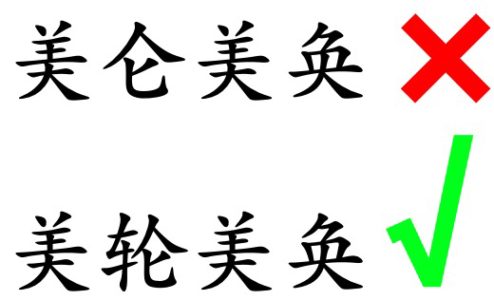
美轮美奂 [měi lún měi huàn] magnificent, sumptuous, originally used to describe constructions/buildings, is also used to describe the fine effect of sculpture or architecture. Attention: 美仑美奂 is wrong. Continue reading “美轮美奂 or 美仑美奂”
启示 and 启事, how to use them correctly?
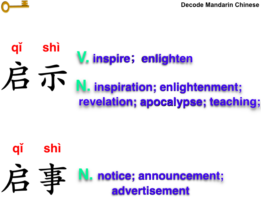
启示 and 启事 have the same pronunciation but very different meanings. Check out the tips on how to differentiate between them. Continue reading “启示 and 启事, how to use them correctly?”