
Think of three very common situations.
You spend a whole week planning a picnic, and just as you’re about to leave, it starts pouring.
Continue reading “偏偏: The Chinese Word English Can’t Translate”Think of three very common situations.
You spend a whole week planning a picnic, and just as you’re about to leave, it starts pouring.
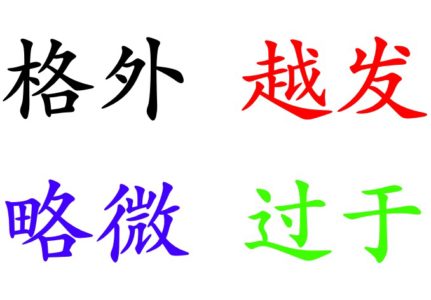
Continue reading “偏偏: The Chinese Word English Can’t Translate”Adverbs of degree refer to adverbs that tell us about degree or intensity. In Chinese, adverbs of degree can modify adjectives or mental verbs. Check out the list of adverbs of degree used in the Chinese language. Continue reading “List of adverbs of degree”
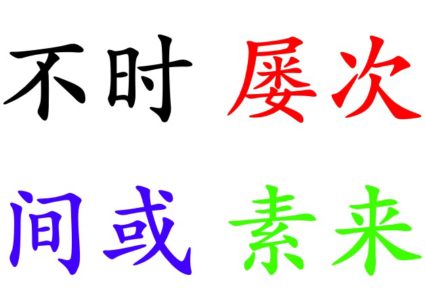
Adverbs of frequency in Chinese are the adverbs that describe how often something occurs. According to the frequency, adverbs of frequency are divided into three categories. Continue reading “Adverbs of frequency in Chinese”
几 and 多 can combine to form a special word 几多 that can be used as an interrogative pronoun or adverb. As a pronoun, its meaning is equivalent to “how many/much 多少”, but it’s far less often used than 多少. Continue reading “How to use 几多?”
Chinese adverbs mainly modify and restrict verbs, adjectives or other adverbs. They express degree, scope, time, frequency, place, manner, situation, mood, cause, correlation, negation, etc. Adverbs have very different features from other words. Here are the characteristics of adverbs in Chinese. Continue reading “Characteristics of adverbs”