
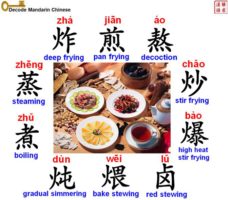
There are numerous cooking methods for Chinese cuisine. The same thing can be cooked in different manners. Just check the following cooking methods. Continue reading “Cooking methods 烹饪方法”
Category: Advanced Learning
Five senses 五感
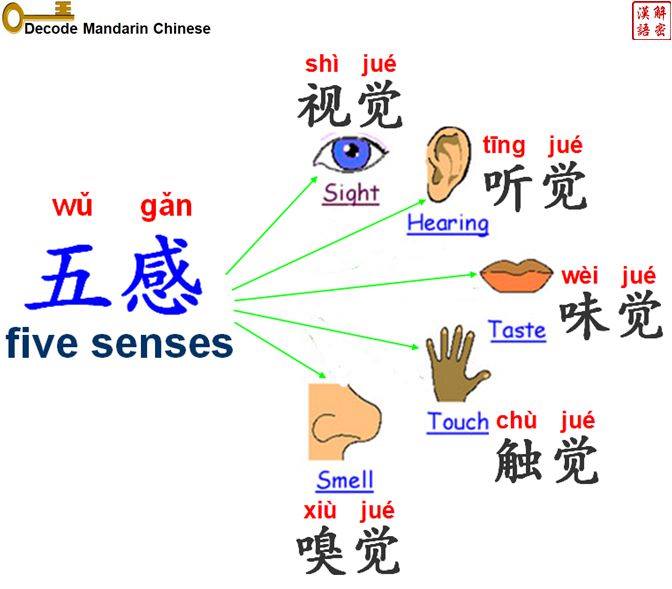
Which are the five senses? How to say in Chinese?五种感觉(五感)之中文。/ 五種感覺之中文。 Continue reading “Five senses 五感”
Different expressions of “beautiful girl/美女”
Besides “美女,” how many ways do you know to say “beautiful girl” in Chinese? Are you ready to say some or all of them to your beloved girl, or are you ready to hear some or all of them from your beloved boy? Just check them out!

天地 Heavan and earth
You must have seen such expressions during the festivals: 欢天喜地过大年/闹元宵。Why not use only 欢喜?What difference is there between 欢喜 and 欢天喜地?
天地 literally means heaven and earth, and is used very often with another two-word phrases such 欢喜, 长久, 昏暗, 惊动, 感谢, etc. to form four-word phrases, also called set phrases, to achieve the effect of emphasis, e.g. 欢喜 with joy 欢天喜地 with extreme joy;长久 for a long time 天长地久 everlasting and unchanging.

Why “闹”元宵?
To learn 闹, it’s better to know the meaning of 市 first. You can see 闹 is composed of 门 door and 市 market. A market is a noisy place, so the original meaning of 闹 was noisy, which is very well expressed by the phrase, 闹市 noisy market.
In Chinese, many adjectives can be turned into verbs which have meanings related to these adjectives, e.g. 闹. The meaning of 闹 is extended from noisy to noisy-related verbs such as make a noise 吵闹, celebrate 闹元宵, suffer from 闹水灾, etc.
