
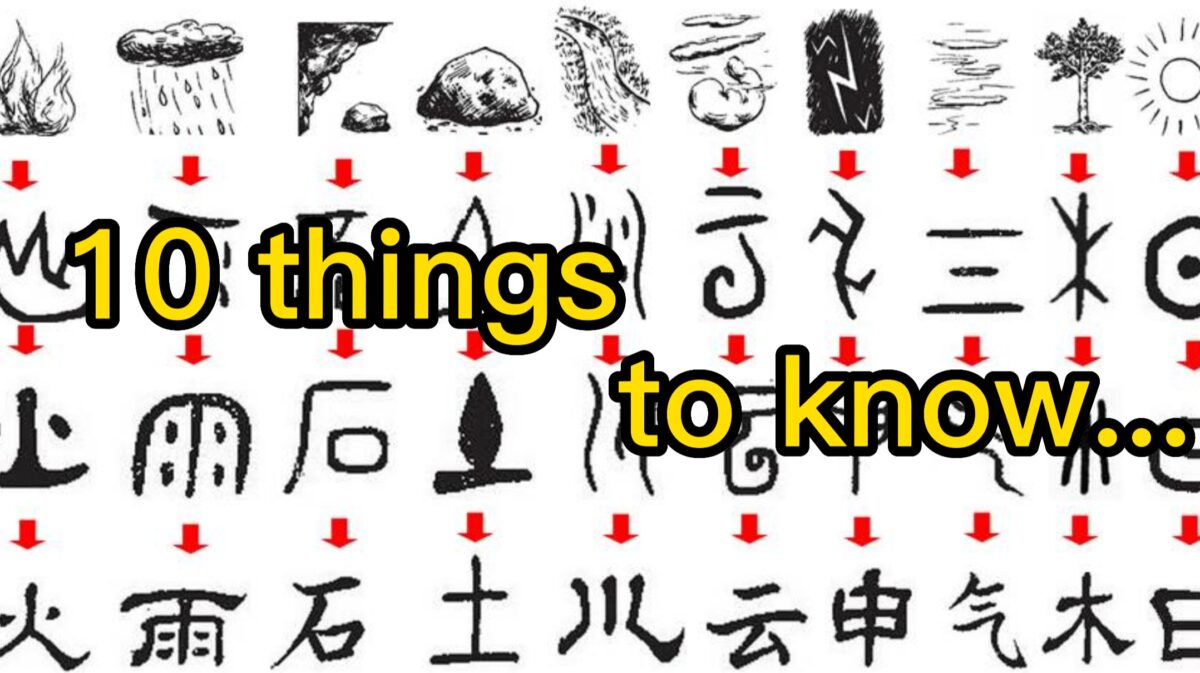
Hello, Chinese learners, in this post, we’ll talk about 10 things (10 characteristics of Chinese characters) about Chinese characters to help you understand what Chinese characters are.
Continue reading “10 things you must know about Chinese characters”棋手vs旗手vs骑手
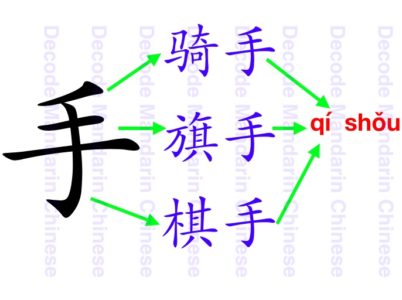
Homophones are a very interesting characteristic in Chinese language. Homophones are words with different meanings which are pronounced in the same way but are written differently. In this post, we will learn three homophones of 手. Continue reading “棋手vs旗手vs骑手”
Are you a 饭桶?
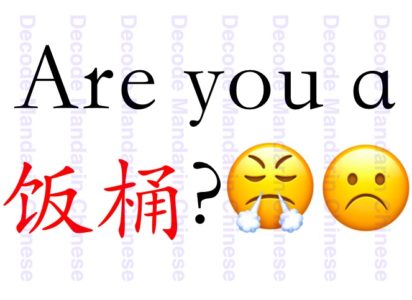
Homonyms are very common in modern Chinese. Confusion of homonyms could be a disturbing problem in a conversation, for example, if you use “饭桶” incorrectly, you could offend someone. Continue reading “Are you a 饭桶?”
Suffix 手
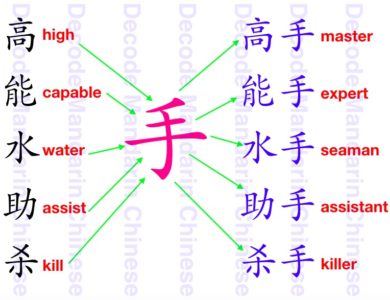
As we have mentioned before that the semantic component 手 is a highly important part in the formation of Chinese characters. For the formation of compound words, 手 also plays an important role, because it can serve as a suffix to form compound words in the following ways: Continue reading “Suffix 手”
All words with 诬 have negative meanings
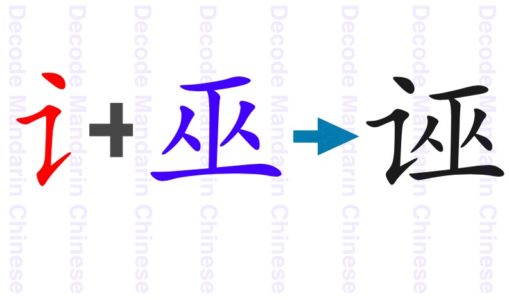
This character 诬 seems to tell us that a witch’s mouth speaks no good words. Do you still believe in a witch or a wizard? Continue reading “All words with 诬 have negative meanings”