
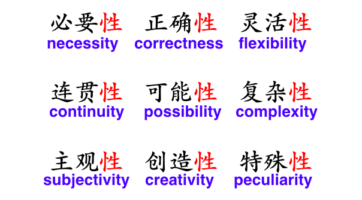
The suffix 性 can turn some adjectives or verbs into abstract nouns ending with “ity, ness, etc” e.g. Continue reading “Suffix 性 and its formula”
One of the Five-star Characters, 紧 II

紧:next; close; tight; closely;e.g.
那两家铺子紧挨着。
The two shops are next to each other.
这抽屉太紧了, 我打不开。
The drawer is so tight that I can’t open it.
这双鞋我穿太紧了。
These shoes are too tight for me.
全国人民团结紧。
The whole nation is closely united.
日程安排得很紧。
The programme is packed.
The relation between a character, a word and a phrase in Chinese
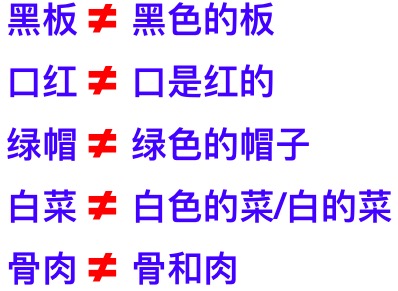
In Chinese, a character is the smallest morpheme. A character is not necessarily a word. Likewise, a word is not necessarily a character. A word can’t be explained literally. So, what’s the relationship between a character, a word and a phrase? Continue reading “The relation between a character, a word and a phrase in Chinese”
Component 曾 a cooker for steaming food
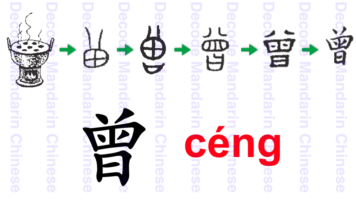
曾, originally a cooker for steaming food, serves as phonetic component and combines with other radicals to form new characters. Continue reading “Component 曾 a cooker for steaming food”
人与人相处/人與人相處
我不问,你不说,这就是距离;
我问了,你不说,这就是隔阂;
我问了,你说了,这就是信任;
你不说,我不问,这就是默契;
我不问,你说了,这就是依赖。
