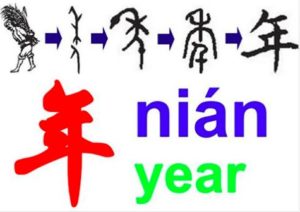
 We are celebrating the new year 新年. Do you know how 年 is from? #年year #人man #收割harvest #禾grain
At the end of the year, people harvest ripe crops. 年 came from the image of a man carrying grain on his back. Learn more about 年.
We are celebrating the new year 新年. Do you know how 年 is from? #年year #人man #收割harvest #禾grain
At the end of the year, people harvest ripe crops. 年 came from the image of a man carrying grain on his back. Learn more about 年.
夏 originally meant ”people in the central state” and later was used to mean “summer” in the sense
that it looks like a person with bare foot and exposed arms.

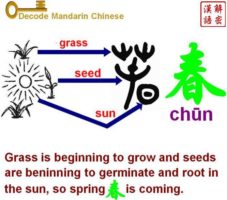 How is 春 from? Why it has a 日?Grass is beginning to germinate the root in the sun, so spring is coming. 春 is derived from the composed meaning of grass, seed and sun. Check more about 春.
In Chinese, homonyms are applied to produce very interesting rhetorical speech. As the Chinese New Year of the Sheep 羊 yáng is drawing near, you will hear one or some of the following greetings with homophonic rhetoric.

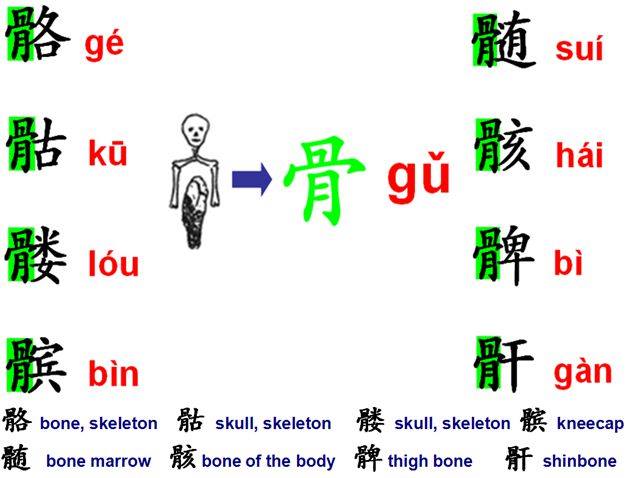
The radical bone denotes ” bone or human body”, so characters with 骨 express meanings related to bone or human body. Continue reading “Radical bone 骨 gǔ”