
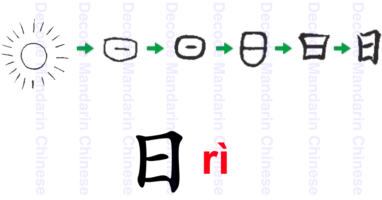
日, pictographic character of the sun, serves as semantic component to form characters. Characters formed by the semantic component 日 have to do with the sun, light, time, dryness, etc such as 明, 早, 晚, 旧, 旭, 时, 旷, 晒, 昆, 旺, 昏, 晕, 暖. Continue reading “Component 日 the sun”
Category: Pictograms
Component lizard 易
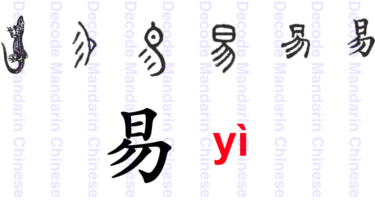
易, originally a lizard, a cognate of 蜴, means: 1.easy 2.friendly 3.to change 4.to exchange. 易 serves as phonetic component. Characters formed by the component lizard 易 have three structures: semantic left-phonetic right, phonetic left-semantic right, and semi-enclosure Continue reading “Component lizard 易”
Component 鬼 demon
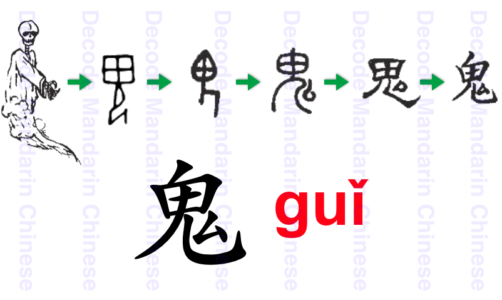
鬼, pictographic component of a demon, with a large frightening head, serves as semantic component to form characters. Characters formed the semantic component 鬼 expresses meanings related to ghosts, worship, temples or superstitious activities such as 魂魄魅魔魑魅魍魉魇. 鬼 also serves as phonetic component. Continue reading “Component 鬼 demon”
Component 巫 tool used by a witch
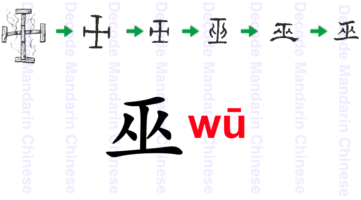
巫, a pictographic character, serves as a semantic as well as a phonetic component to form characters. Continue reading “Component 巫 tool used by a witch”
Component body 身
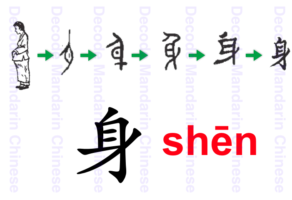
身, a pictographic character of a body, can act as semantic component to form characters. Characters formed by the semantic component body 身 have to do with body or actions related to body. 身 can also serves as phonetic component to form some characters.
Continue reading “Component body 身”