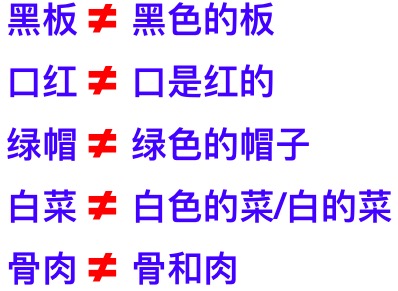
In Chinese, a character is the smallest morpheme. A character is not necessarily a word. Likewise, a word is not necessarily a character. A word can’t be explained literally. So, what’s the relationship between a character, a word and a phrase? Continue reading “The relation between a character, a word and a phrase in Chinese”
Category: Advanced Learning
800 commonly-used Chinese characters in China, Japan, and Korea
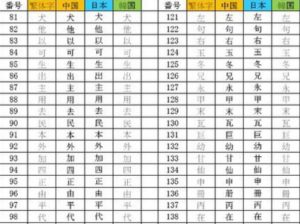
2014年4月22日,《中日韩共同常用八百汉字表》在扬州举行的第九届东北亚名人会上获得中日韩三国代表一致赞成通过。根据《中日韩共同常用八百汉字表》,只要熟记808个汉字,即使不会汉语、日语和韩语,在这三个国家也可以进行简单的交流。这样,三国青年不仅可以“笔谈”,方便旅游,增进交流,还能为三国青年互相学习彼此语言提供方便。 Continue reading “800 commonly-used Chinese characters in China, Japan, and Korea”
One of the Five-star Characters, 紧 I
紧 is a must-learn character if your want to make your Chinese improved to a new level. This time we are going to learn one of its meanings: urgent; pressing; tense
时间很紧。
Time is pressing.
风声紧。
Things are tense.
任务紧。
The task is urgent.
枪声越来越紧。
The firing got heavier and heavier.

When you hear one of these expressions, you are really bothering or harassing others

The difference between 最后 and 终于
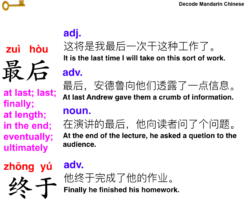
最后 and 终于 are very similar in use but they are different! They are different both grammatically and semantically. Continue reading “The difference between 最后 and 终于”