
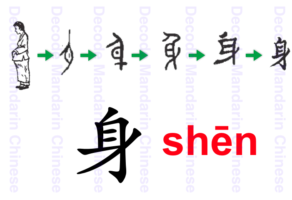
身, a pictographic character of a body, can act as semantic component to form characters. Characters formed by the semantic component body 身 have to do with body or actions related to body. 身 can also serves as phonetic component to form some characters.
Continue reading “Component body 身”
Author: Decode Mandarin Chinese
Component 異 a man wearing a mask
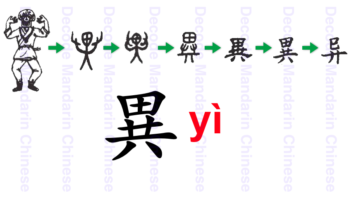
異, originally a man wearing a mask, serves as semantic or phonetic component to form characters. There are just few characters formed by the component 異. Continue reading “Component 異 a man wearing a mask”
屰 an inverted person
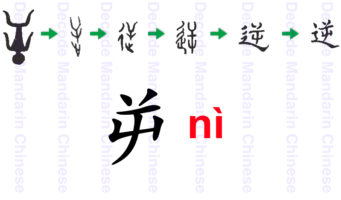
屰, an inverted person, serves as both semantic and phonetic component to form characters. Characters formed by the semantic component 屰express meanings related to inverse, rebellious, disobedient, towards, in advance. Continue reading “屰 an inverted person”
Component 考 an old man with a walking stick
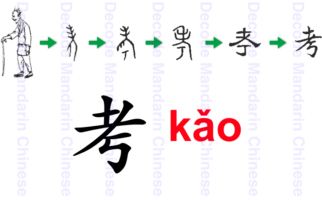
考, originally an old man with a walking stick, serves as phonetic component to form characters. Continue reading “Component 考 an old man with a walking stick”
老 an old person
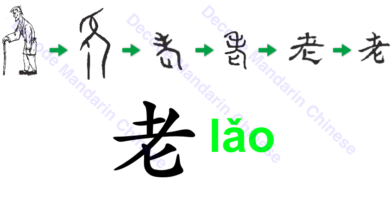
老, a pictographic character of an old person, serves as both a phonetic and a semantic component to form characters. All the characters formed by the phonetic component 老 are pronounced lǎo except 峔. Continue reading “老 an old person”