
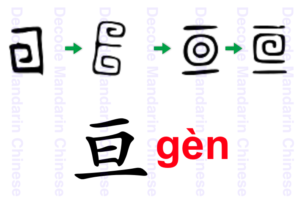
亘, a compound ideographic character of whirling water, serves as phonetic component to form characters. Continue reading “Component 亘 whirling water”
Author: Decode Mandarin Chinese
Component 夕 dusk
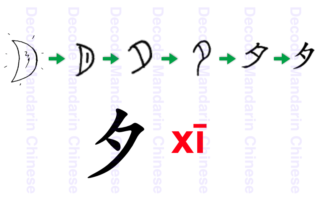
夕, a simple ideographic character of dusk/evening/night, serves as semantic component to form characters. Characters formed by the semantic component 夕 have to do with time, night or night activities. Continue reading “Component 夕 dusk”
Component lizard 易
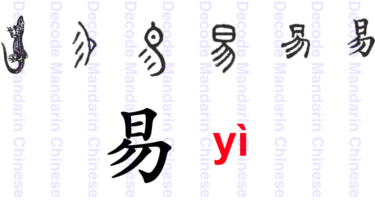
易, originally a lizard, a cognate of 蜴, means: 1.easy 2.friendly 3.to change 4.to exchange. 易 serves as phonetic component. Characters formed by the component lizard 易 have three structures: semantic left-phonetic right, phonetic left-semantic right, and semi-enclosure Continue reading “Component lizard 易”
Component insect, worm, bug 虫
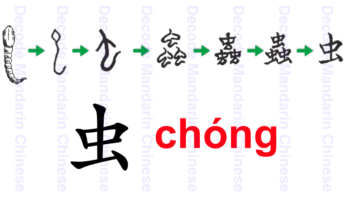
虫, insect, worm, bug, serves as semantic component/radical to form characters. Characters formed by the semantic component insect has three structures: semanic left – phonetic right, semi-enclosed, phonetic up-semantic down. Continue reading “Component insect, worm, bug 虫”
Component couple or a pair 丽
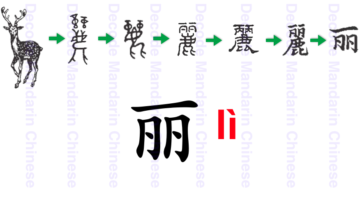
丽 originally meant a pair, a couple, a meaning later represented by 俪. 丽 was extended to represent “beautiful”. The character resembles two deer skins and a deer head, i.e. things in pairs. 麗 has been simplified to 丽, with the component representing the deer’s head removed. It serves as phonetic component. There are just several characters formed by the phonetic component couple 丽. Continue reading “Component couple or a pair 丽”