
“When I walk along with two others, from at least one I will be able to learn. – Confucius 三人行,必有我师焉;择其善者而从之,其不善者而改之。/ 三人行,必有我師焉;擇其善者而從之,其不善者而改之。”
Author: Decode Mandarin Chinese
How is 年 from? Pictogram of 年
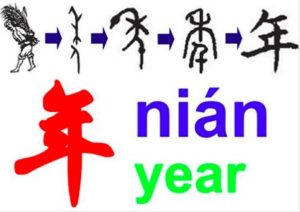 We are celebrating the new year 新年. Do you know how 年 is from? #年year #人man #收割harvest #禾grain
At the end of the year, people harvest ripe crops. 年 came from the image of a man carrying grain on his back. Learn more about 年.
How is 夏 from?
夏 originally meant ”people in the central state” and later was used to mean “summer” in the sense
that it looks like a person with bare foot and exposed arms.

Homophonic Rhetoric in Chinese
In Chinese, homonyms are applied to produce very interesting rhetorical speech. As the Chinese New Year of the Sheep 羊 yáng is drawing near, you will hear one or some of the following greetings with homophonic rhetoric.

Radical bone 骨 gǔ
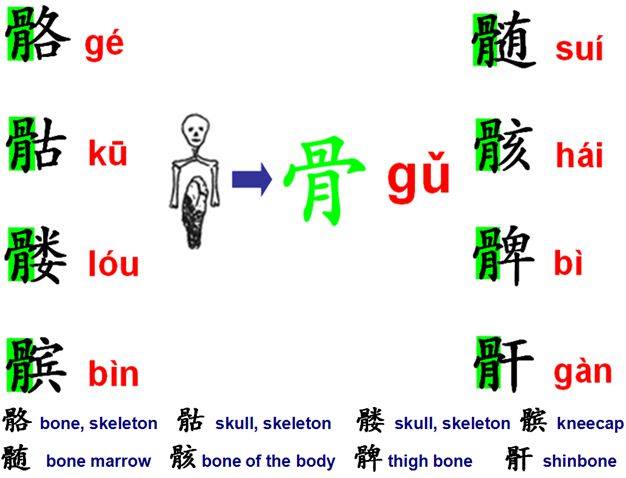
The radical bone denotes ” bone or human body”, so characters with 骨 express meanings related to bone or human body. Continue reading “Radical bone 骨 gǔ”