
The radical city 阝is derived from the character 邑 yì. 阝is also called 右耳旁in Chinese. What meanings do the characters formed by the radical city 阝have? Continue reading “Radical city 阝: on the left or right?”
Author: Decode Mandarin Chinese
Radical mound 阝阜: on the left or right?
The radical mound 阝is originally from the character 阜 fù. Characters with the radical mound 阝have to do with “terrain, rise, lower, etc” or its extended meaning. Continue reading “Radical mound 阝阜: on the left or right?”
Component snake 它
它 tā, originally a snake, is used as a pronoun “it” in modern Chinese. It can act as phonetic component to form characters. Many of the characters formed by the phonetic component snake 它 have the same pronunciation tuó. Continue reading “Component snake 它”
Radical heart 心
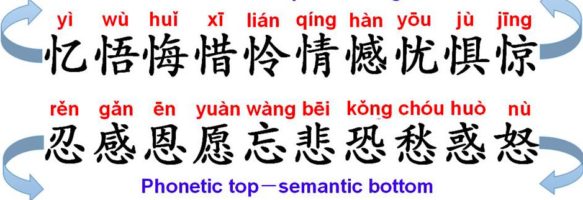
The radical 心 can combine with other parts in two different ways to form new characters. Continue reading “Radical heart 心”
They have the exactly same pronunciation as that of 平
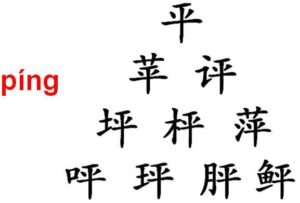 平 is so loyal!
All these characters with the component 平 are pronounced the same as 平 píng. As for their meanings, just check the semantic parts, e.g 枰 = 木 + 平(枰, a kind of tree),鲆 = 鱼 + 平(鲆, a kind of fish).