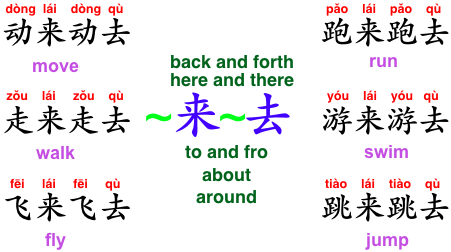
Sometimes you want to express a meaning in Chinese: verb + back and forth/to and fro/here and there/about, e.g. fly back and forth, move back and forth, walk here and there, etc. You can say literally 飞回来飞回去,移回来移回去,走到这里和那里, etc, but there is a formula of ~来~去 you can use to express the same meaning, making your sentence more idiomatic. Continue reading “Formula of ~来~去”
任务很艰巨,我真吃不()?
任务很艰巨,我真是吃不()。which one?
A. 动?
B. 起?
C. 住?
D. 消?
任务很艰巨,我真是吃不()。which one?
A. 动?
B. 起?
C. 住?
D. 消?

Related post:
小丑面具
着魔
一瞬间 法则颠覆
我是谁 是我心魔乱舞
对与错 我能顿悟
恶魔开始 让真理复苏
迷雾中 谁在低诉
最高的荣耀 享受孤独
用奋斗 去征服
踏平 天地间的愤怒
云再黑 风再吼 不能让我停下征途风雨无阻
任脚下的 众神 为我 铺成一条英雄路
一滴泪 在 半路回头 我只有 战斗 战斗
满天星 在 坠落之后 我祈祷 别走 别走
那温度 已 无法保留 爱已经 冷透 冷透
我的心 愿 和你共有 一起到 尽头 尽头
迷雾中 谁在低诉
最高的荣耀 享受孤独
用奋斗 去征服
踏平 天地间的愤怒
云再黑 风再吼 不能让我停下征途风雨无阻
任脚下的 众神 为我 铺成一条英雄路
一滴泪 在 半路回头 我只有 战斗 战斗
满天星 在 坠落之后 我祈祷 别走 别走
那温度 已 无法保留 爱已经 冷透 冷透
我的心 愿 和你共有 一起到 尽头 尽头
Collocations of 打: 你会“打”什么?
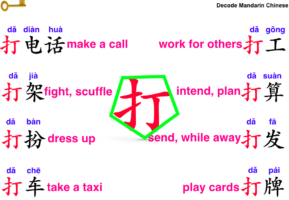
打 =手 + 丁. It originally meant “hammer a nail into a plank”, and its meaning was extended widely. In modern Chinese, 打 has many different collocations such as 打理,打包,打听,打扮, 打算, 打游戏,打球,打电话,打车,etc. Continue reading “Collocations of 打: 你会“打”什么?”
formula
formula, 起, afford
Decode Mandarin Chinese
Comment
formula
formula, 起, afford
Decode Mandarin Chinese
Comment
formula
formula, 起, afford
Decode Mandarin Chinese
Comment
formula
formula, 起, afford
Decode Mandarin Chinese
Comment
formula
formula, 起, afford
Decode Mandarin Chinese
Comment
formula
formula, 起, afford
Decode Mandarin Chinese
Comment